Air Canada Cancelled My Flight — Here’s How I Fought Back (And What Every Canadian Needs to Know)
Smarter Spending. Bigger Travels.
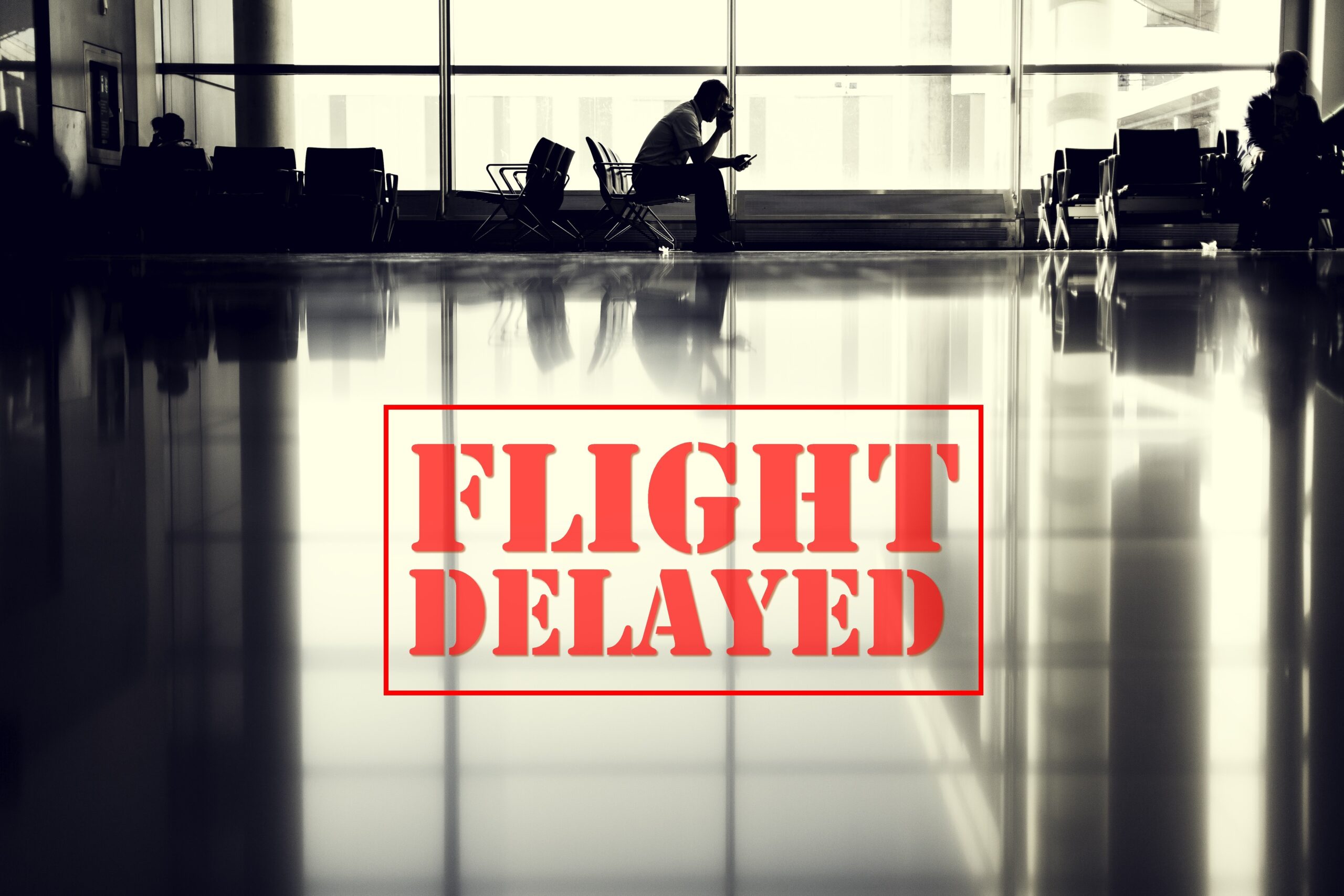
Photo: Tumisu / Pixabay
We were supposed to be on a beach in Jamaica.
Instead, at 3:05 PM on February 21, 2026 — nearly seven hours after our original departure time — we were standing in Toronto Pearson Airport being told that our flight was cancelled. We’d already boarded. We’d already sat on the plane for three hours. We’d been given contradictory explanations that changed every time someone opened their mouth or we checked the app.
What followed was a masterclass in how Canadian airlines handle compensation claims — and how passengers can fight back.
Before I go further — an important clarification.
I want to be clear that this article is not an attack on Air Canada. I genuinely love Air Canada. I fly with them regularly, I’m a loyal Aeroplan member, and the points system has taken me to Greece for $128 in taxes. I plan to keep flying with them for years to come.
This article is not about tearing down an airline. It’s about a systemic reality that applies to every major carrier — not just Air Canada. When compensation claims come in, airlines have a financial incentive to deny them, and they know that most average passengers don’t know their rights well enough to push back. That’s not unique to Air Canada. That’s the airline industry.
My goal is simply this: if you’re a Canadian traveller who has experienced a cancellation or significant delay, you deserve to know what the law actually says and what tools you have available. That’s all this is.
This article documents everything: what happened, what the law actually says, the letters I sent, the responses I received, and how I escalated to the Canadian Transportation Agency. I’m sharing my actual correspondence — word for word — because the single most useful thing I can do for a fellow Canadian traveller is show them exactly what this process looks like in real life.
What Happened — The Full Timeline
Understanding the timeline matters because under Canada’s Air Passenger Protection Regulations, the total length of delay determines your compensation entitlement.
| Time | Event |
|---|---|
| 5:20 AM | Email notification — aircraft requires changing |
| 8:30 AM | Original scheduled departure |
| 12:12 PM | Boarded replacement aircraft |
| 12:30 PM | New scheduled departure time |
| Onboard | Verbally told: delays due to paperwork, then a rivet requiring repair |
| 1:43 PM | Air Canada app updated departure to 2:45 PM — reason: “unscheduled aircraft maintenance” |
| 3:05 PM | Verbally advised flight is cancelled |
| 3:19 PM | Email confirmation of cancellation — reason: “unforeseen technical issue with the aircraft” |
| Next morning | Rebooked flight originally scheduled 10:00 AM — departed 12:10 PM |
Total delay from original departure to actual arrival at destination: more than 9 hours.
Air Canada provided hotel accommodation and meal vouchers of $60 each. The vouchers were appreciated — though by the time we were sent back to the hotel in the mid-afternoon, they weren’t useful for the lunch and dinner we still needed. We used them the following morning at the airport before our rebooked flight, and spent the remainder stocking up on snacks and drinks for our Airbnb. You work with what you have.
One more thing worth noting: the reasons given verbally on the plane differed from what appeared on the app and what arrived by email. Three different communications. Three slightly different explanations. That inconsistency matters — and I documented all of it.
What the Law Actually Says — APPR in Plain English
Canada’s Air Passenger Protection Regulations (APPR) came into force in 2019 and apply to all flights to, from, and within Canada. Here is what they establish for flight cancellations:
The Three Categories
Under APPR, airlines are required to pay passengers compensation for flight delays or cancellations that are in their control and not related to safety. The situation within airline control but required for safety purposes covers standards of treatment and completion of passenger’s itinerary — but not compensation. Situations outside airline control require only completion of the passenger’s itinerary.
| Situation | Hotel & Meals | Rebooking | Cash Compensation |
|---|---|---|---|
| Within airline control | ✓ | ✓ | ✓ Up to $1,000 |
| Within control but required for safety | ✓ | ✓ | ✗ None |
| Outside airline control | ✗ | ✓ | ✗ None |
What Counts as Within Airline Control?
Situations within airline control include commercial overbooking, scheduled maintenance of an aircraft that is necessary to comply with legal requirements, or mechanical malfunction of the aircraft identified during scheduled maintenance. Situations within airline control but required for safety purposes are typically unforeseen events legally required to reduce safety risk to passengers — while this includes mechanical problems, it does not include scheduled maintenance or mechanical problems identified during scheduled maintenance.
This distinction is critical — and it’s exactly where airlines like to blur the lines.
Compensation Amounts for Large Carriers
Passengers are entitled to compensation based on the length of delay at arrival at their final destination. A passenger has one year to make a compensation claim with the airline that operated the disrupted flight. The airline has 30 days to respond by issuing a payment or indicating why it believes compensation is not owed.
| Delay Length | Compensation (Large Carriers) |
|---|---|
| 3–6 hours | $400 CAD |
| 6–9 hours | $700 CAD |
| 9+ hours | $1,000 CAD |
Our delay exceeded 9 hours. We claimed $1,000 per passenger — $2,000 total.
The Burden of Proof Is On the Airline — Not You
This is the most important thing most Canadians don’t know:
The amendments to the Act passed by Parliament put the burden on airlines to prove the situation is an exceptional circumstance.
You don’t have to prove you deserve compensation. They have to prove you don’t.
My Compensation Claim — The Letter I Sent
Here is the exact letter I submitted to Air Canada:
Dear Air Canada, I am submitting a formal compensation claim under the Air Passenger Protection Regulations (APPR) regarding the cancellation of our flight departing Toronto on February 21, 2026. Original flight details: Scheduled departure: February 21 – AC982 at 8:30 AM from Toronto. At 5:20 AM we were notified via email that the aircraft required changing. New departure time: 12:30 PM. We boarded a replacement aircraft at approximately 12:12 PM. We were advised verbally on the plane of delays due to paperwork and subsequently informed that a rivet required repair. At 1:43 PM the Air Canada app showed an updated departure time of 2:45 PM citing “unscheduled aircraft maintenance.” At 3:05 PM we were advised verbally the flight was cancelled. At 3:19 PM we received an email confirming cancellation due to an “unforeseen technical issue with the aircraft.” We were provided with meal vouchers totaling $60 each and hotel accommodation and rebooked for February 22 at 10:00 AM. The rebooked flight ultimately departed late as well at approximately 12:10 PM on February 22. The original flight delays and cancellation resulted in our arrival at our destination more than 9 hours later than originally scheduled. The reason provided for cancellation was a technical/mechanical issue (“unscheduled aircraft maintenance” and rivet repair), which falls within the airline’s control under APPR. As Air Canada is a large carrier and the delay exceeded 9 hours, we are requesting compensation of: $1,000 per passenger × 2 passengers = $2,000 total Please confirm payment within the 30-day period required under APPR. If Air Canada believes this disruption was outside its control or required for safety, please provide the specific cause of the cancellation and the internal delay or disruption code associated with this flight, as recorded in your operational records, in accordance with the Air Passenger Protection Regulations. Sincerely, Patricia Bellemore
Why this letter works:
- Documents the full timeline with specific times
- Names the specific regulation being claimed under
- Calculates the exact compensation amount
- Requests the internal delay code — a move most passengers never make
- Sets the 30-day legal deadline
Air Canada’s Response — And What It Really Means
Thirty days later, Air Canada responded:
“After investigation, your Air Canada flight was disrupted due to a safety-related issue. Air Canada airplanes are maintained in accordance with the required maintenance program but not all malfunctions, such as this one, can be foreseen or prevented through regular maintenance. The technical fault was unexpected and all reasonable measures were taken to avoid the flight disruption. In accordance with the Air Passenger Protection Regulations, compensation does not apply under these circumstances.”
This is the safety exception defence — the single most commonly used tool airlines deploy to deny APPR compensation claims. Here’s what you need to understand about it:
- It’s a legitimate exception. Some mechanical issues genuinely do qualify as safety-required disruptions outside the airline’s fault.
- But it requires proof — which they didn’t provide. A generic letter claiming “safety-related issue” is not proof. They are required to demonstrate the exception applies. Asserting it is not the same as proving it.
- A rivet issue raises questions. A rivet on a commercial aircraft doesn’t fail without any warning. This is exactly the kind of issue that raises legitimate questions about whether their regular maintenance program should have detected it — which would place it squarely within their control, not exempt from compensation.
- They ignored my request for the internal delay code. I specifically asked for it. They didn’t provide it. That refusal is significant.
My Follow-Up — Requesting Documentation
I didn’t accept the denial. I sent a second letter requesting the specific documentation that would support or undermine their safety claim:
“You indicated that the flight disruption was caused by an unexpected technical fault that was within Air Canada’s control but required for safety. In order to better understand this determination under the Air Passenger Protection Regulations, I am requesting the following information and documentation: Aircraft tail number Specific description of the technical fault Maintenance log entries related to this issue Aircraft defect report for this fault Whether this issue involved deferred maintenance Whether the failure was related to routine maintenance or wear and tear The inbound flight number for the aircraft operating my flight An explanation of why this issue was classified as “required for safety” under APPR rather than a routine mechanical issue As you know, under the Air Passenger Protection Regulations, the airline bears the burden of demonstrating that a disruption was required for safety and not due to routine maintenance or foreseeable mechanical issues. I would appreciate receiving this information so I can determine whether this claim has been properly assessed under APPR.”
Every single item on that list is relevant to determining whether their safety exception claim holds up. Airlines that have legitimate safety claims can provide this documentation. Airlines that are using the safety exception as a convenient shield often cannot — or will not.
Air Canada’s Final Response — A Wall
Their reply to my documentation request:
“While I am sorry to hear of your continued disappointment with our decision, I would like to reassure you that our assessment remains fully aligned with the Air Passenger Protection Regulations. Regarding your request for additional information, I regret to inform you that the details you are seeking are operational in nature and intended for internal use only. For this reason, we are unable to provide them. Further exchanges will not change our position.”
Read that last sentence again.
“Further exchanges will not change our position.”
That is an airline telling a passenger — in writing — to give up. They also addressed me as “Mr. Bellemore” in a formal legal correspondence. A small detail that speaks volumes about how seriously my claim was being reviewed.
What their refusal to provide documentation actually signals: If the safety exception was legitimate and well-documented, providing the maintenance records would strengthen their position. Refusing to provide them suggests the documentation may not support their narrative as cleanly as their letter implies.
At this point I had done everything required under APPR — submitted a formal claim, received a denial, followed up with a specific documentation request, and been stonewalled. There was one avenue left.
Escalating to the Canadian Transportation Agency
If your complaint is not resolved with the airline, you can make a complaint with the Canadian Transportation Agency. The CTA processes complaints and settles disputes between travellers and airlines.
How to File a CTA Complaint
- Visit rppa-appr.ca — the official Air Passenger Protection portal
- Click “File a Complaint”
- Have ready: your booking reference number, complete flight itinerary, all correspondence with the airline, documentation of what you were provided (hotel, meal vouchers), and a timeline of events with specific times
Critical: It is essential to submit a complete and accurate complaint the first time. You must include the names of all passengers and all issues related to your complaint. Once the form is submitted, you will not be able to add further information. Do not rush this. Take your time and include everything.
My CTA complaint is filed and pending. I will update this article the moment there is a resolution — because I want Canadians to know whether this process actually delivers results or whether it’s another wall dressed up as a door.
What the Law Is Moving Toward
Here’s some genuinely encouraging news for Canadian air passengers:
Updated regulations would require airlines to compensate passengers for flight disruptions unless they can prove “exceptional circumstances” caused the delay or cancellation — such as a security threat, an unlawful act, an environmental disaster, or disruptive passenger behaviour.
Notice what’s NOT on that list: mechanical issues. Under the proposed new framework, a rivet repair would almost certainly trigger mandatory compensation. The updated regulations have been in development since 2023 and are expected to come into force — though the timeline has repeatedly slipped.
“The original sin on this file was the government writing an enormously complicated set of regulations — all kinds of grey areas, all kinds of loopholes and exemptions — to the point where the average consumer files a complaint with the carrier, the carrier just says ‘Nah,’ and then you have to file a complaint with the regulator. That was supposed to be a last resort.”
That quote from a passenger rights advocate perfectly captures what happened to us.
What You Should Do If This Happens to You
Step 1 — Document Everything in Real Time
Screenshot the app. Save every email. Note the exact time of every verbal communication and what was said. The contradictions in Air Canada’s communications became a key part of my claim.
Step 2 — Know Your Category
Was your cancellation weather? Mechanical? Staffing? The reason determines your entitlement. Mechanical issues are almost always within the airline’s control — with a narrow safety exception they must prove, not just claim.
Step 3 — Submit a Formal Written Claim
Don’t call. Write. Email Air Canada’s customer relations department with: your booking reference, complete timeline with specific times, the APPR regulation you’re claiming under, the exact compensation amount you’re requesting, a request for their internal delay code, and the 30-day payment deadline.
Step 4 — Request Documentation If Denied
If they invoke the safety exception, request the maintenance logs, defect report, tail number, and internal delay code. Their response — or refusal — tells you everything.
Step 5 — Escalate to the CTA
If the airline stonewalls you, file at rppa-appr.ca. Include all correspondence. Be thorough. Be patient.
Step 6 — Don’t Give Up When They Tell You To
“Further exchanges will not change our position” is not a legal ruling. It’s a pressure tactic. The CTA exists precisely because airlines say this to passengers every single day.
The Bottom Line
Air Canada cancelled our flight due to a mechanical issue. Under APPR we are entitled to $1,000 per passenger. They denied our claim using a generic safety exception letter, refused to provide the documentation that would support that claim, and told us further correspondence was pointless.
We filed with the CTA anyway.
Whether the system ultimately delivers the result the law appears to support — that’s the question this article will answer when the complaint is resolved. Check back for the update.
In the meantime: know your rights, document everything, and don’t give up just because an airline tells you to.
CTA complaint filed. Update coming.
Have you been through this process? Share your experience in the comments — the more Canadians talk about this openly, the harder it becomes for airlines to count on our silence.
Disclaimer: This article documents my personal experience and is intended for informational purposes only. It does not constitute legal advice. For specific legal questions about your own situation, consult a qualified professional or contact the Canadian Transportation Agency directly at rppa-appr.ca.