www.pattiwithpassport.ca
Smarter Spending. Bigger Travels.
Best eSIM for Any Trip: What Actually Matters
📌 This post contains affiliate links. If you book through one, I may earn a small commission at no extra cost to you — it’s part of how I keep this site running. I only recommend providers I’ve researched and would genuinely use myself.
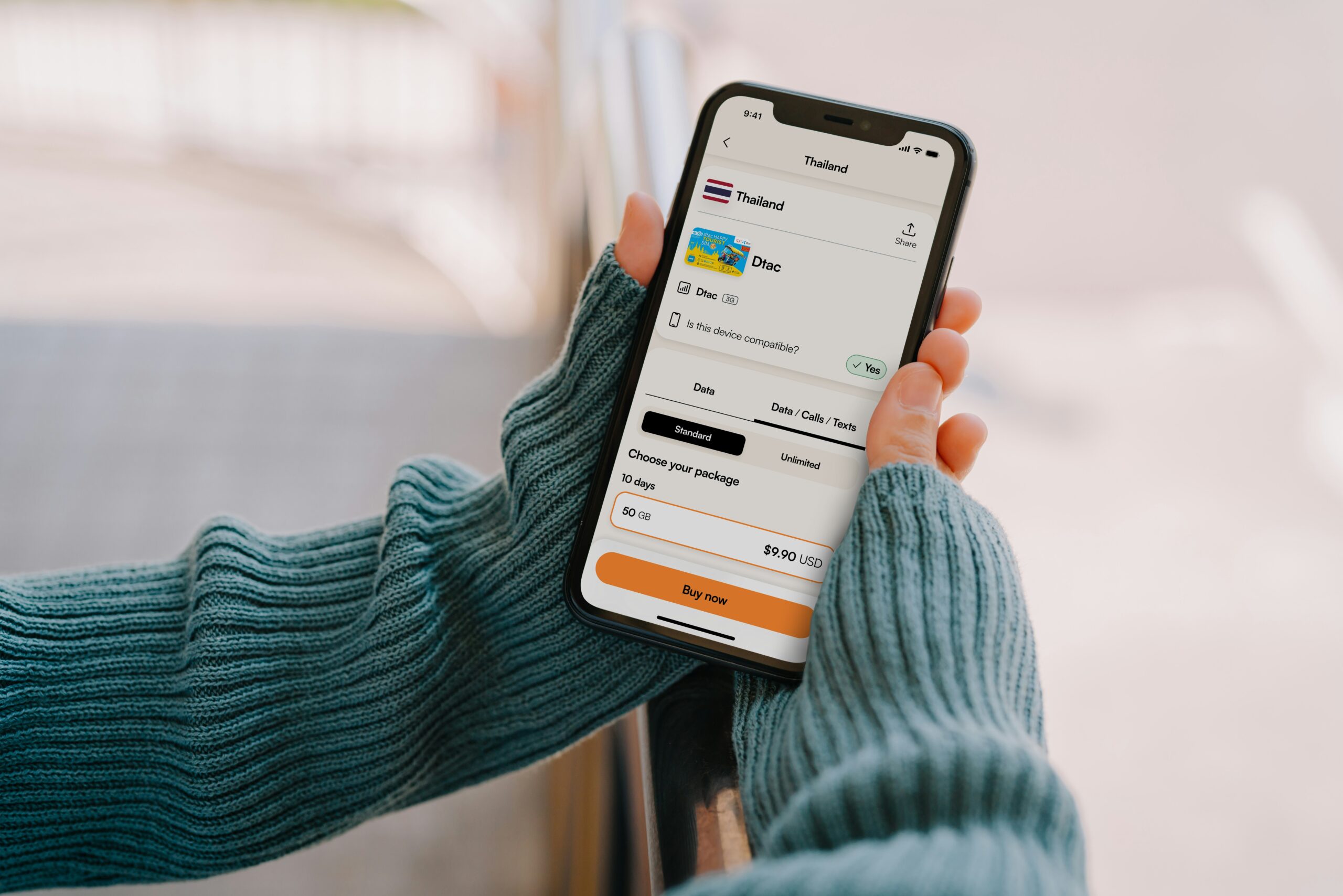
If you’ve read my What 2 Weeks in the Greek Islands Actually Costs a Canadian, you already know the math on roaming: Canadian carriers typically charge $10–$15 per day through Rogers, Bell, or Telus. For a 15-night trip, that’s potentially $225 CAD just to use your phone the way you normally would — check a map, confirm a reservation. Finding the best eSIM for travel sidesteps that roam trap entirely, often for a fraction of a single day’s cost with your home provider.
But “get an eSIM” isn’t the whole answer. Which provider you pick still makes a real difference in what you’re actually paying and whether it works when you land — and that’s where most comparisons stop short.
Why Network Matters More Than the Brand Name
Most eSIM comparisons lead with price, then mention coverage almost as an afterthought — a line like “good coverage in most areas” with nothing to back it up. That ordering is backwards. The thing that actually determines whether your eSIM works when you land isn’t the price tag — it’s which local carrier that brand has partnered with, and whether it can switch between more than one if the signal’s weak. Nail that part and price becomes the easy decision. Get it wrong, though, and you’re stuck with a dead zone in the middle of your trip, no matter how cheap the plan was.
I used Greece for the pricing side of this comparison since it’s where I’m headed this fall for my 50th birthday trip — but the pattern holds everywhere, because it comes down to how each provider is structured, not the destination. eSIM providers don’t build their own cell towers. They negotiate access to local carriers and resell it, which means the provider name matters far less than which carrier or carriers they’ve actually partnered with wherever you’re going. That’s true whether you’re headed to Greece, Japan, or Jamaica — the structure travels, even when the specific carriers don’t.
Here’s the real split between these three:
- Airalo — 2 networks in Greece (Nova, Vodafone), auto-switches between them
- Yesim — 3 networks in Greece (Cosmote, Vodafone, Wind), auto-switches between them
- GigSky — 1 network in Greece (Cosmote only), no alternative to switch to
So the real question isn’t just “does this provider switch carriers” — it’s “how many carriers, and does that list include the strongest one where I’m actually headed.”
Greece eSIM Comparison
eSIM providers sell plans at all kinds of lengths, and pricing shifts destination to destination — there’s no single universal number. For this comparison, I’ve used 14/15-day plans specifically, since that matches the length of my own upcoming Greece trip and gives a real, apples-to-apples window to compare across all three providers. All pricing below is live checkout pricing in CAD.
Yesim
15 Days| Unlimited | $66.30 |
| 10GB Capped | $27.20 (30-day) |
| 20GB Capped | $37.40 (30-day) |
| Network | Cosmote, Vodafone, Wind — auto-switch |
GigSky
14 Days| Unlimited | $54.39 |
| 10GB Capped | $21.67 (30-day) |
| 20GB Capped | $42.07 (90-day) |
| Network | Cosmote only |
Provider by Provider
Airalo
Airalo’s the biggest name in the eSIM space for a reason — the app is dead simple, checkout is fast, and 24/7 live chat means you’re never stuck waiting on email. For Greece specifically, it switches between Nova and Vodafone, which is more than enough if your trip sticks to Athens and the big-name islands like Santorini or Mykonos. It’s also the only one of the three that sells a genuine short-validity data-capped plan, so you’re not paying for a month of coverage on a two-week trip.
The tradeoff is price and network reach. Airalo runs the highest unlimited pricing of the three at this validity window, and its two-carrier list skips Cosmote entirely — the network with the strongest signal once you’re off the mainland tourist track. If your Greece itinerary is Athens-and-the-classics, that’s a non-issue. If you’re island-hopping into the smaller Cyclades, it’s worth knowing before you buy.
Yesim
Yesim’s real edge is that it partners with all three Greek carriers — Cosmote, Vodafone, and Wind — and automatically connects to whichever has the strongest signal wherever you are. That’s genuinely useful for island-hopping, where coverage quality shifts port to port, and it means Yesim is the only one of the three with both breadth and the strongest network in its mix. Pricing sits in the middle of the pack, and the 20GB tier is the standout value here — nearly double the data of the 10GB plan for about $10 more, both on the same 30-day validity.

The catch is Yesim doesn’t sell short-validity plans the way Airalo does — everything data-capped runs on a 30-day minimum, so a two-week trip pays for coverage you won’t use all of. Support is fast, though — a 6-minute average response time beats both competitors here.
GigSky
GigSky is the cheapest of the three at this validity window, running exclusively on Cosmote — Greece’s strongest network for island coverage, with confirmed 5G in Athens and Thessaloniki and reliable 4G everywhere else. If price and Cosmote’s reach matter most to you, this is the pick.
But that single-carrier setup cuts both ways. Cosmote being the strongest network doesn’t mean it’s immune to outages, congestion, or a dead spot in one specific location — and GigSky has no second carrier to fall back on if that happens. Yesim and Airalo both have somewhere to switch to; GigSky doesn’t. Combined with its slowest customer service of the three — no live chat, email-only support with response times ranging anywhere from a few hours to a few days — that’s a real tradeoff to weigh, not just a footnote. Best price doesn’t always mean best protected, and this is the case that proves it.
The Breakdown — Who Wins Where
- Best price: GigSky, at nearly every tier.
- Best network breadth: Yesim — the only provider with access to all three Greek carriers, including the strongest one.
- Best customer service: Yesim, with a 6-minute average response time and 24/7 live chat.
- Best for short trips: Airalo — the only one offering short-validity data-capped plans instead of forcing a 30-day minimum.
- Best review base: Airalo, with the largest volume of Trustpilot reviews (36,000+), even though its score sits slightly below the other two.
- Biggest risk factor: GigSky — cheapest option, but single-network with no fallback if Cosmote has an issue, and the slowest support to help you through it.
The Part That Applies No Matter Where You’re Going
For my own trip, this one’s a clear decision: Yesim is my choice for Greece. It’s got the broadest carrier access of the three, including Cosmote — the network with the strongest reach into the smaller islands, which matters for the kind of itinerary I’m planning. It’s also the only option with a real fallback built in: if one network dips, there are two others to lean on. On top of that, its support response time beat both competitors by a wide margin, which is exactly the kind of thing you don’t think about until you actually need it mid-trip.
But that verdict is specific to Greece, not universal. The real takeaway that does travel with you is this: before you book an eSIM for any destination, check three things — how many carriers the provider actually switches between, whether the strongest local network is on that list, and what happens if your one network has a bad day.
- If price matters most: GigSky wins that fight in Greece.
- If short-trip flexibility matters most: Airalo’s validity options are the most flexible of the three.
A single-carrier setup that saves you money is only a good trade if you’re comfortable with zero backup. But network access — and what happens when it fails — is the one factor that determines whether any of that even works when you land. That’s the first thing worth checking, wherever you’re headed next.
Thank you! I never considered to check what services are covered by which networks. I’ll have to look into Everest now!
Absolutely! Sometimes there is more to think about than just cost.